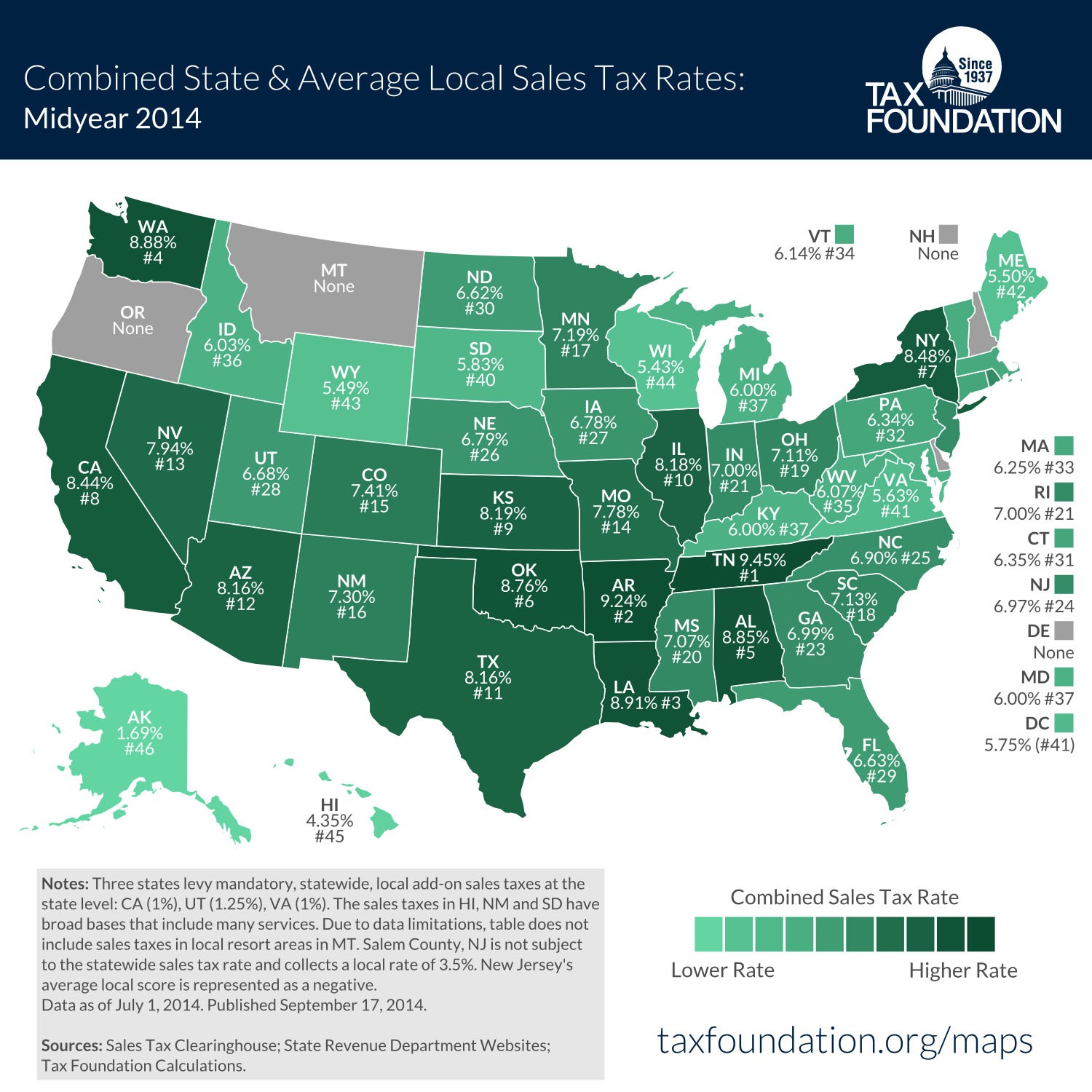
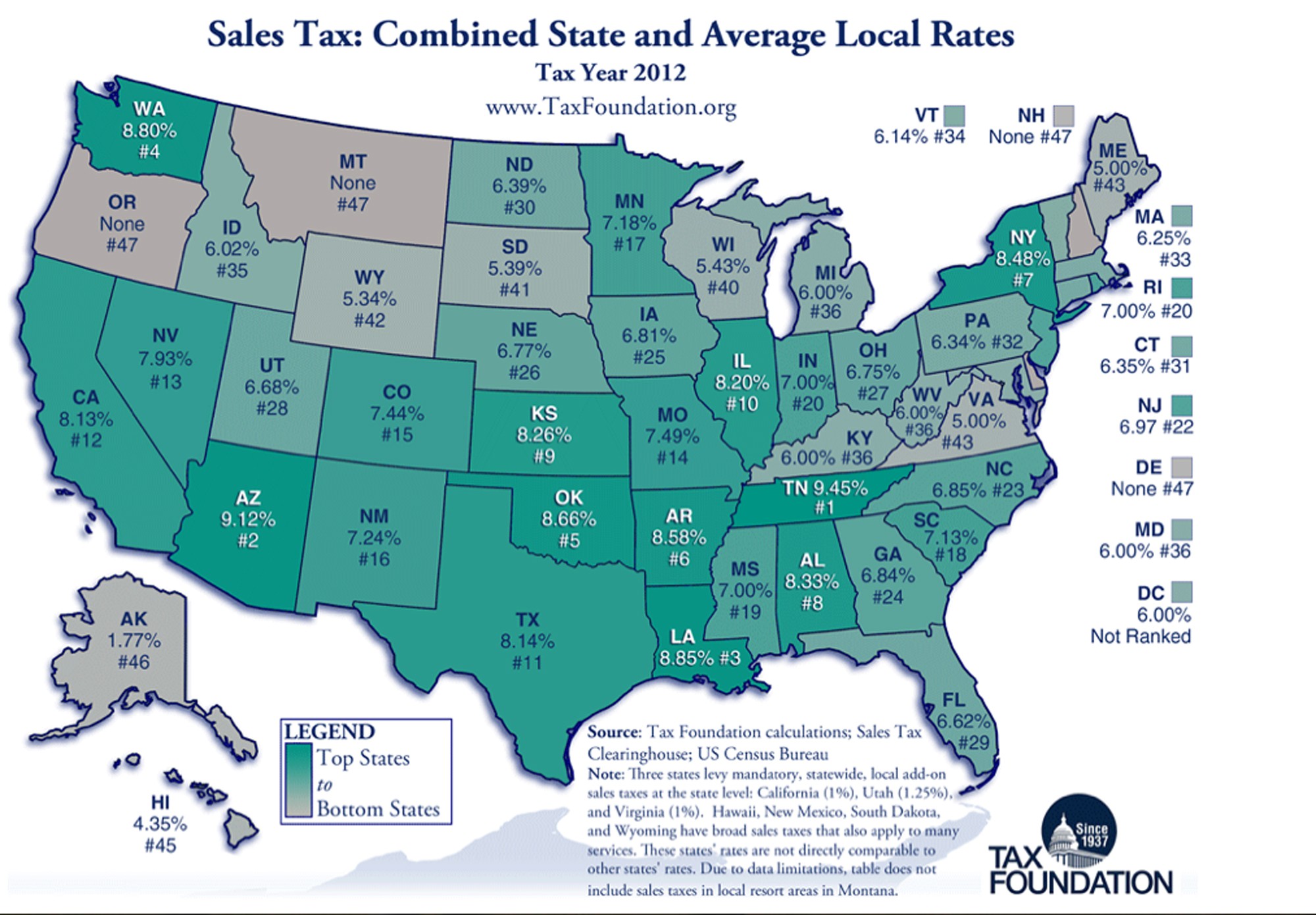
While most Americans assume sales tax is uniform, the reality is that five states—Alaska, Delaware, Montana, New Hampshire, and Oregon—levy no statewide sales tax at all, leaving local jurisdictions to set their own rates. Sales tax by state functions as a consumption-based levy applied at the point of retail sale, with each state independently determining its taxable goods, services, and rate thresholds, which currently range from 0% to over 9% depending on locality. This variation creates a practical advantage for businesses and consumers: by knowing each state’s specific base and rate structure, you can accurately calculate total transaction costs, compare cross-border purchasing decisions, and ensure compliance with the correct taxing authority. Mastering state-specific sales tax rules is therefore essential for precise budgeting and avoiding costly errors in interstate transactions.
Why Your Tax Rate Changes the Moment You Cross a State Line
Crossing a state line instantly shifts your applicable sales tax because each state sets its own base rate, and local jurisdictions add their own layers. The moment you physically enter a new state, the seller’s point of delivery or your location determines the rate, not your home address. Why your tax rate changes the moment you cross a state line comes down to state sovereignty: Alabama, for example, has a low base but high local averages, while Oregon has no statewide sales tax. Even a drive from one county to another within the same state can alter the total, but the interstate boundary is the sharpest cutoff because sales tax by state is anchored to that state’s specific statutory framework. You cannot carry your previous rate with you; the new state’s combined state-plus-local charge applies immediately to your transaction.
Understanding Origin-Based vs. Destination-Based Pricing
The moment you cross a state line, your tax rate shifts because states follow either origin-based or destination-based pricing. In an origin-based system, you charge the tax rate where your business is physically located, regardless of where the buyer sits. Destination-based means you apply the rate where the package lands—the customer’s shipping zip code. Most states use destination rules, so if you sell from a low-tax area to a high-tax city, the higher rate applies. Your own storefront’s rate only matters for in-person sales or if you operate in one of the few origin states like Texas or Arizona. Before quoting a price, always confirm the buyer’s address rather than assuming your home base rate.
How Local City and County Taxes Stack on Top of State Rates
When you cross a state line, the posted state sales tax rate is rarely the full story. Local city and county taxes stack directly on top of that base rate, creating a combined total you actually pay. In states like Alabama or Louisiana, local add-ons can push the effective rate several percentage points higher than the state figure alone. The stacking follows a clear sequence: first, the state levy applies; then, your specific city’s rate adds on; finally, the county’s rate layers over both. Because these jurisdictions overlap, a single metro area can have different totals than a rural town ten miles away. Always check the combined rate at the exact destination address.
- Identify the state base rate.
- Add your city’s specific surcharge.
- Add the county’s surcharge for the final total.
What Is the Difference Between State Tax, Sales Tax, and Use Tax?
State tax is a broad umbrella covering income or flat levies, while sales tax is a transactional percentage added at the point of purchase, varying wildly by state. The key difference with use tax is its role as a complementary tax on out-of-state purchases where no sales tax was collected. When comparing sales tax by state, you pay sales tax to the seller’s state at checkout; but if you buy online from another state and the seller doesn’t charge tax, you owe use tax to your home state at the same rate. This prevents residents from dodging local levies. Essentially, sales tax is collected upfront by retailers, while use tax is self-reported for remote or untaxed buys—both tied directly to your state’s specific rate.
When You Owe Use Tax Instead of Sales Tax on Out-of-State Purchases
You owe use tax instead of sales tax when you buy tangible goods from an out-of-state seller who does not collect your home state’s sales tax at checkout. This typically occurs with online retailers lacking nexus in your state, or when you purchase from a catalog or phone order. Your state’s use tax rate generally matches its sales tax rate, and you report the amount on your annual return, often via a separate line item. The obligation arises only if the seller fails to charge you the equivalent tax, not when you travel and bring items back.
- Identify the purchase price paid, excluding shipping if your state exempts it.
- Verify your state’s applicable use tax rate and any de minimis threshold.
- File the payment with your state’s revenue department, usually during tax filing season.
How to Calculate the Combined Rate for Any Address
To calculate the combined rate for any address, start by identifying the specific state, county, and city tax rates that apply to that exact location, since these layers stack independently. Use a geolocation-based tax tool or your state’s revenue department website, inputting the full street address to trigger the precise jurisdiction codes. Then, simply add the state base rate to any district or transit surcharges, ensuring you exclude any tax types not applicable to your product type. This sum becomes your effective checkout multiplier. Remember that combined rate calculation requires pinpoint address validation, not just a ZIP code, to avoid undercharging. Finally, multiply the purchase price by this decimal rate to get the exact tax due.
Q: How do you calculate the combined rate for an address without a paid tool?
Manually, you would check the state’s base rate, then find the county and city ordinance rates via official municipal documents—a tedious, error-prone process, so free state-run lookup tools by full address are far more reliable.
How to Look Up the Exact Rate for Any ZIP Code in Seconds
To find the exact sales tax rate for any ZIP code in seconds, skip the guesswork and use a dedicated rate-lookup tool that pulls from a live database of state and local jurisdictions. Simply type in the ZIP code, and the tool instantly breaks down the combined state, county, and city rates, plus any special district taxes. Since sales tax by state varies wildly—and even differs within the same city—this method ensures you’re not relying on a flat statewide average. Instant sales tax lookup is your fastest path to accuracy, especially when dealing with remote sellers or multi-location purchases. For the most precise result, cross-check the ZIP code against the actual shipping address, because boundaries can overlap. That’s the whole trick: exact ZIP code rate retrieval takes seconds when you use a current, address-aware calculator.

Using Free State Department of Revenue Tools vs. Third-Party Calculators
For pinpoint accuracy, **free state Department of Revenue tools** are the gold standard, as they pull live tax tables directly from official databases—ideal for legally binding transactions. Third-party calculators, while faster for bulk ZIP comparisons, rely on cached data that can lag behind mid-year rate changes. To verify a single code, always cross-check a calculator’s output against your state’s official lookup page. For multiple ZIPs, use third-party tools for a rough scan, then confirm final numbers via state resources.
Q: Are third-party calculators ever more accurate than state tools?
A: Rarely—but they excel at aggregating multi-state rates quickly. Use them for estimates only; state tools remain the sole authoritative source for exact, current rates.
What to Do When the Rate Differs from What Your POS System Says
When your POS displays a rate that conflicts with the official state or local figure, first re-verify the address using the ZIP+4 code, as a five-digit ZIP often spans multiple taxing jurisdictions. Then, check the effective date on your POS’s tax table against the current rate, since municipalities can update rates mid-quarter. If the discrepancy remains, manually override the transaction rate for that single sale and document the correct amount for your records. Do not assume the POS is wrong without confirming the destination’s exact boundary lines, especially near county edges. Finally, reconcile the difference with your tax software provider, as a stale tax table in your POS system is the most common cause of errors.
Which Products Are Taxable in One State but Exempt in Another
Product taxability varies sharply by state, creating compliance traps for sellers. For instance, clothing is generally exempt in Pennsylvania and New Jersey, but taxable in Mississippi and Utah, where even essential apparel like jeans incurs sales tax. Similarly, candy is exempt in California but taxable in Connecticut, while groceries are exempt in most states yet taxable in Alabama and Mississippi. Snack foods, such as chips, are taxable in Texas but exempt in New York. Digital products like e-books are taxed in Washington but exempt in Florida. Q: Why does this matter? A: Because a seller shipping to multiple states must apply each destination’s rules, not their home state’s, or risk audit exposure. Always verify the specific product’s taxability in the buyer’s state before checkout.

Grocery Items, Clothing, and Digital Goods: A State-by-State Quick Reference
For a fast read on state-by-state sales tax differences, focus on the big three: groceries, clothing, and digital goods. Most states exempt unprepared food, but Arkansas, Mississippi, and Tennessee still tax it—at reduced rates. Clothing is generally tax-free in Minnesota, New Jersey, and Pennsylvania, yet states like California tax all apparel, while New York only exempts items under $110. Digital goods are the wildcard—downloadable software, e-books, and streaming are taxable in Connecticut and Texas, but fully exempt in California and Florida. Check your state before checkout: a $50 shirt, a carton of milk, or a Kindle purchase can swing the total by 8% or more depending on your zip code.
How to Handle Mixed Carts That Include Taxable and Non-Taxable Items
When a single cart contains both taxable and non-taxable items, your checkout system must apply tax only to the eligible products, never to the exempt ones. Calculate tax on a line-item basis, using the correct rate for the ship-to state, rather than on the order total, since blended totals distort liability. Accurate mixed-cart handling requires separate tax flags per SKU, which your software should reconcile automatically against the destination state’s rules. If you manually override, verify the exempt category—such as clothing under a state threshold—did not shift due to a discount or coupon allocation. Coupons applied to the entire cart often trigger pro-rata tax adjustments, so assign discounts proportionally to each line’s taxable base. Always test a mixed order before going live in a new state.
Q: How do I handle a mixed cart when a state exempts groceries but taxes household goods?
A: Split the cart by product type at checkout, taxing only the household goods at the state’s rate, while leaving the groceries untaxed. Ensure your system uses the item’s ZIP-level rate and ignores the exempt portion entirely.
Common Mistakes New Sellers Make with Multi-State Rates
New sellers often treat “sales tax by state” as one flat number, but that’s the first mistake—they plug in a single rate and ignore that many states have thousands of local jurisdictions with their own rates. Another big one is assuming your home state’s rate applies everywhere you ship, so you undercharge customers in high-tax states and overcharge in low-tax ones, which either eats your profit or scares buyers off. You also need to remember that rates change quarterly, so setting them once and forgetting them means you’re collecting stale amounts. Even a “correct” rate is useless if you calculate it on the wrong base, like shipping charges that some states tax and others don’t. Finally, don’t guess your nexus—selling into a state without checking if you have to collect there leads to either missed collections or charging tax where you have no obligation, making reconciliation a nightmare.
Why Using Your Home Rate for a Remote Sale Triggers a Penalty
Charging your home state’s rate for a remote sale creates a tax mismatch that flags your account for audit. The destination-based sourcing rule means you owe the rate where the buyer takes delivery, not where your business sits. When you undercharge, you remit less than the buyer’s state expects, and that discrepancy triggers a penalty for incorrect remote sales tax collection. Your home rate is irrelevant once the order crosses state lines—using it violates each state’s sourcing laws and accrues interest on the shortfall. This mistake also forces you to file amendments for every past invoice, multiplying your liability.
- Each state’s rate applies to the ship-to address, so your home rate never matches the legal obligation.
- Under-remitting by even a fraction per transaction adds up to a penalty based on the total shortfall.
- Using your home rate makes your records inconsistent with state filings, triggering automated audit red flags.
- Penalty amounts often include backdated interest sales tax calculator from the original sale date, not just the error’s discovery.

How to Set Up Automatic Rate Detection in Your Checkout
To stop guessing at state-specific taxes, integrate a real-time sales tax rate API directly into your checkout. First, select a provider like TaxJar or Avalara that plugs into your ecommerce platform. Then, enable “auto-rate detection” in the settings—this triggers geolocation from the customer’s shipping ZIP code. Test the sandbox with addresses from different states to confirm the correct rate applies at the cart page, not just at order review. Finally, set a fallback rule for invalid ZIP codes, such as charging your home state’s rate. This removes manual overrides and prevents under-collection errors before they hit your ledger.
Automatic rate detection eliminates manual tax tables, ensuring the correct state rate is applied instantly from the shipping address.
What to Do If You Overcharged a Customer and Need to Refund the Tax
When you overcharge sales tax, the refund process must reconcile both the customer and your state filing. First, issue a documented refund for the overcollected amount directly from your merchant account, not from future tax remittances. Then, adjust your current sales tax return by claiming a credit for that refunded tax, but only if your state permits deduction of errors; otherwise, file an amended return. Overcharged customer tax refunds require proof—keep the original invoice, refund receipt, and a note explaining the rate error. Never simply absorb the loss, as you’ll still owe the overcollected amount to the state if you don’t formally correct it.
- Refund the exact overcharged tax plus any rounded difference before the filing deadline.
- Check if your state allows taking a credit on the next return versus requiring a separate amended filing.
- Retain all correspondence showing the customer accepted the refund to avoid disputes later.